+254 797 717 537 info@rockhoppersafaris.com

Login

Sign Up

After creating an account, you'll be able to track your payment status, track the confirmation and you can also rate the tour after you finished the tour.
Username*
Password*
Confirm Password*
First Name*
Last Name*
Email*
Phone*
Country*
* Creating an account means you're okay with our Terms of Service and Privacy Statement.

Already a member?

Login
+254 797 717 537 info@rockhoppersafaris.com

Login

Sign Up

After creating an account, you'll be able to track your payment status, track the confirmation and you can also rate the tour after you finished the tour.
Username*
Password*
Confirm Password*
First Name*
Last Name*
Email*
Phone*
Country*
* Creating an account means you're okay with our Terms of Service and Privacy Statement.

Already a member?

Login

Maasai Mara Game Reserve

Home of the 8th World Wonder- The Wildebeest Migration

Background Information

Masai Mara National Reserve is considered a “must see” for any visitor traveling on safari in Kenya. It is on the “to do” list of most Kenyan visitors because the park is graced by a wide variety of unique and exquisite wild life and birds. Masai Mara is the best place to see all of the “Big Five” animals (elephants, lions, leopards, rhinos and buffalo) together. The famous wildebeest migration also takes place at the Mara.

Masai Mara National Reserve (also known as Masai Mara or The Mara) is situated within the Great Rift Valley in the southern part of Kenya. Measuring approximately 1510sq. kilometers (approx. 938sq. miles) in size, this unfenced savannah grassland is roughly 150 miles southeast of Nairobi. Maasai Mara derives its name from the indigenous people of Kenya – the Maasai tribe – and the Mara River that cuts through the park. The Masai Mara provides the best view of the famous wildebeest migration as the animals cross the Mara River between July and August. The Mara is also home to the richest concentration of wildlife, including the “Big Five” (elephants, lions, leopards, rhinos, and buffalo), zebras, antelope, gnus, Oribis, hyenas, giraffes, warthogs, gazelles, hartebeests, hippos, crocodiles and others.

The park has the largest concentration of African lions, including the black-maned lion. Birdlife is as plentiful as wildlife at the Masai Mara, which boasts over 400 different birds’ species. The park experiences a hot and dry climate with a regular rainfall season twice a year. The reserve’s topography is mainly open savannah (grassland) with clusters of acacia trees along the southeastern area of the park. The Mara and Talek rivers grace the rolling plains of the reserve. Myriad seasonal rivers appear during the rainy season but dry out once the rains are gone. Maasai Mara National Reserve does not fall under the jurisdiction of the Kenya Wildlife Service (KWS); instead, it is managed by the local county council of Narok district.

What to see and do

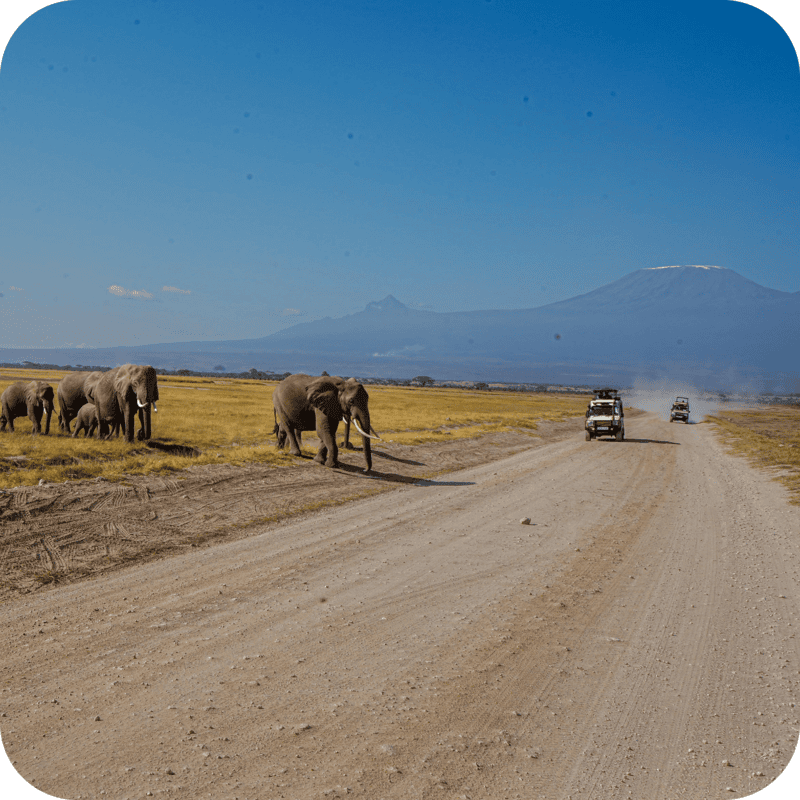
The Masai Mara Game Reserve is one of the best places in Africa for wildlife viewing. Game drives are a great way to experience the park and they take place all year round. If the big cats are what you’re looking for on your Kenyan safari, you are guaranteed to spot them at the Mara. All of the “Big Five” animals (elephants, lions, leopards, rhinos, and buffalo) can be spotted here. However, the population of black rhinos is severely threatened with only 37 black rhinos left as of 2000. Herds of plains zebras are found throughout the park, as well as Masai giraffes, common giraffes, jackals, white-bearded gnus, Oribis, warthogs, Thomson’s and Grant’s gazelles, hartebeests, hyenas, bat-eared foxes, rare Topi antelope and beautiful rone antelope, as well as hippos and crocodiles in the Mara River.

Wildebeest Migration

Over 1.5 million wildebeest, zebras and several species of antelope make an annual circular tour between the Serengeti in Tanzania and Masai Mara in Kenya in search of greener pastures. The trek happens with a fair share of animal drama as the migrating herds attract the attention of hungry predators – the hyenas and lions that prey on the lame and sick animals along the way. The animals trek for four months (July-October) towards the Mara. The months of July and August are the best times to see what is truly the world’s most spectacular wildebeest migration and the dramatic sights that occur during the mass crossing of the swollen Mara River.

Latest Tours

10-Days Splendid Unforgettable Luxury Kenya Safari

🐘 Kenya Safari Holiday Package – 9-Day Luxury Adventure Across Kenya’s Wild Landscapes Embark on an unforgettable journey with our Kenya Safari Holiday Package, designed for travelers seeking both wild adventure and luxurious comfort. This 9-day guided safari takes you through some of Kenya’s most iconic national parks and landscapes—offering a perfect blend of game […]
0

7-Day Luxury Kenya Safari Holiday

Kenya Luxury Safari – Samburu & Maasai Mara Kenya adventure with our luxurious safari tour of Samburu National Reserve and Maasai Mara National Reserve, two of the country’s most iconic wildlife destinations. This tour combines exquisite lodges, thrilling game drives, and authentic cultural experiences for an unforgettable safari vacation. Day 1–2: Samburu National Reserve Begin […]
0

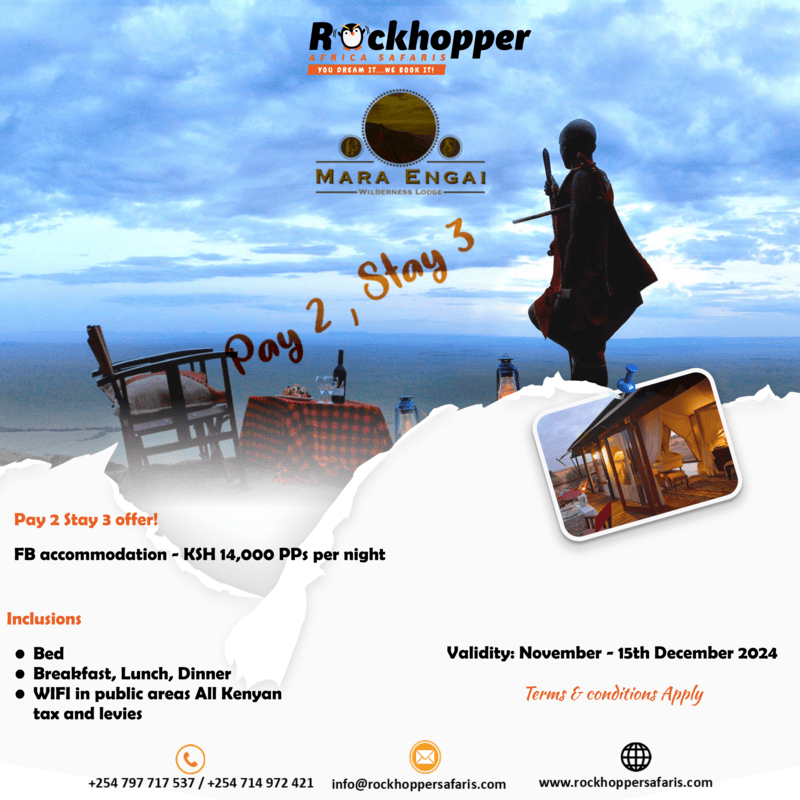
MARA ENGAI WILDERNESS LODGE

Maasai Mara Adventure – Pay 2 Stay 3 Offer Experience the breathtaking beauty of the Maasai Mara with our exclusive Pay 2 Stay 3 offer at Mara Engai Wilderness Lodge. Starting from Ksh 14,000 per person per night on full board, this package is perfect for travelers seeking luxury, adventure, and authentic wildlife experiences. Accommodation […]
0